
Faultline
Cross-Domain Strategic Infrastructure Mapping
Mapping the dependencies, escalation pathways, and governance fractures across orbital, nuclear, lunar governance, and cyber systems.

Four Connected Domains
Enter the Strategic Layers
Each platform maps one domain of critical infrastructure in depth. Together, they form the analytical foundation upon which Faultline reveals cross-domain dependencies and systemic risk.
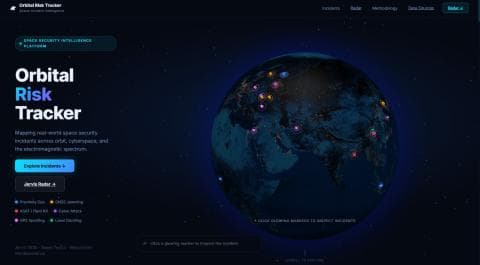
Orbital
Orbital Risk Tracker
Mapping satellite constellations, orbital debris fields, and the strategic vulnerabilities of space-based infrastructure. Policy-grade interface for space security intelligence.
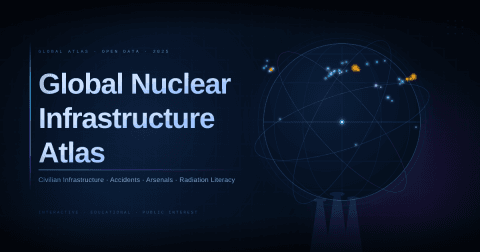
Nuclear
Global Nuclear Infrastructure Atlas
A geospatial atlas of global nuclear facilities, enrichment sites, reactor networks, and strategic posture across civilian and dual-use infrastructure.
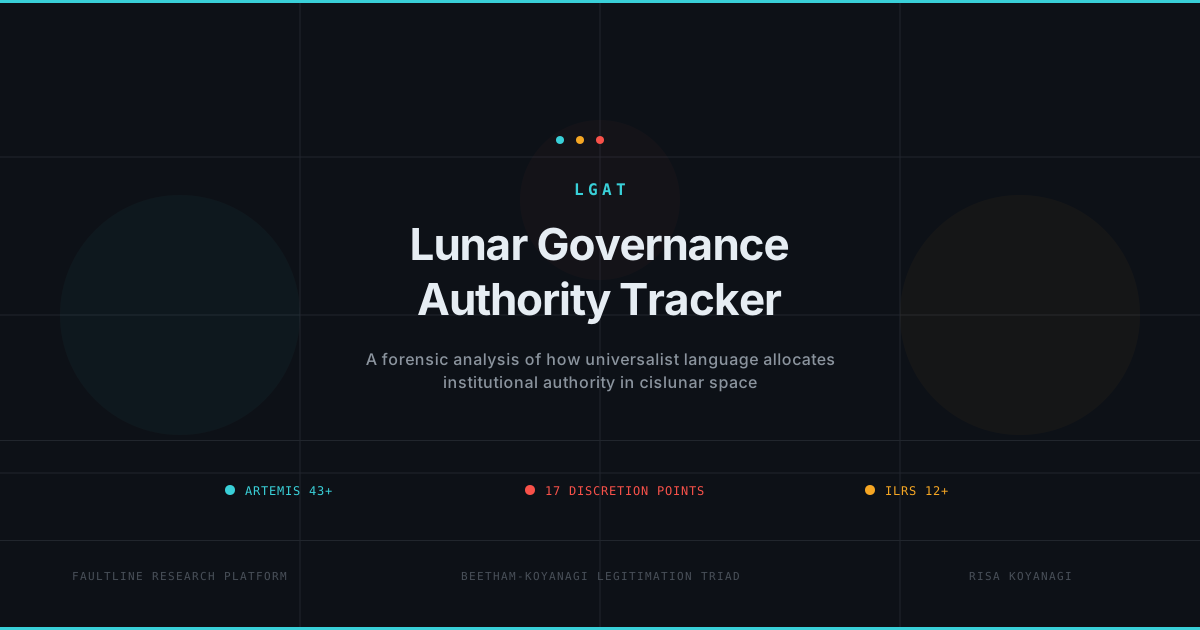
Lunar Governance
Lunar Governance Authority Tracker
Mapping authority structures in contested lunar governance. Framework analysis across all spacefaring states—who writes the rules, who interprets them, and who decides who participates.
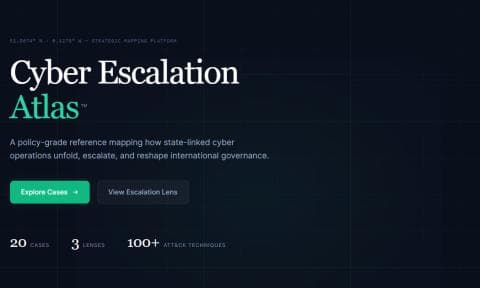
Cyber
Cyber Escalation Atlas
Charting cyber operations, escalation dynamics, and the pathways through which digital disruption cascades into strategic consequence.
“Orbital, nuclear, lunar governance, and cyber systems do not fail in isolation. Faultline maps the dependencies, escalation pathways, and governance fractures that emerge across them.”
About the Platform
What Faultline Is
Faultline is a connective research interface linking four domain-specific platforms: orbital infrastructure, nuclear infrastructure, lunar governance, and cyber escalation. Its purpose is not only to display separate systems, but to reveal the structural fault lines that form between them.
Each platform maps one domain in depth. Faultline provides the connective layer—identifying where dependencies accumulate, where escalation pathways cross boundaries, and where governance structures remain fragmented across sectors that are increasingly coupled in practice.
Orbital
Space systems, satellite infrastructure, and orbital risk dynamics
Nuclear
Global nuclear infrastructure, facilities, and strategic posture
Lunar Governance
Lunar governance authority mapping, mandate analysis, and treaty framework comparison
Cyber
Cyber operations, escalation patterns, and attack surface mapping
Cross-Domain Thesis
Why Siloed Analysis Is No Longer Sufficient
Strategic risk no longer remains neatly bounded by sector. Technical dependencies, political signaling, institutional fragmentation, and infrastructural coupling allow disruption to travel across domains.
A disruption in orbital systems can degrade nuclear command-and-control. Contested lunar governance frameworks shape strategic posture. A cyber operation against energy grids can alter nuclear calculations. Misperception in one domain can trigger escalation in another. To understand these dynamics, separate maps are not enough.
Infrastructure interdependence creates risk spillover
Systems designed independently now share physical links, data pathways, and supply chains that transmit disruption across boundaries.
Escalation travels through technical and political coupling
A failure or attack in one domain can reshape calculations and responses in others, often through indirect and poorly understood channels.
Governance authority concentrates through ambiguous mandates
Competing lunar governance frameworks deploy universalist language while concentrating interpretive power, leaving cross-domain authority contested.
Governance institutions remain fragmented by sector
Regulatory and diplomatic frameworks still operate within domain silos, leaving cross-domain risks systematically under-governed.
“To understand escalation today, separate maps are not enough. Risk travels across orbital, nuclear, lunar governance, and cyber domains through pathways that no single framework can trace alone.”
Systems Convergence
Mapping the Fault Lines
Where orbital, nuclear, lunar governance, and cyber infrastructures intersect, strategic vulnerabilities accumulate.
Structural convergence of cross-domain risk pathways and governance fault lines
Analytical Framework
What the Platform Reveals
Cross-Domain Dependencies
Orbital communication links underpin nuclear command-and-control. Cyber networks enable satellite operations. Energy grids sustain all four. Faultline maps these dependencies to show where disruption in one domain degrades capacity in another.
Escalation Transfer
A cyber intrusion into early-warning systems can trigger nuclear miscalculation. Anti-satellite operations can sever the communications that prevent escalation. These are not hypotheticals—they are structural features of interconnected systems.
Governance Authority Concentration
Competing lunar governance frameworks—the Artemis Accords and the ILRS—deploy universalist language while concentrating interpretive power. Discretion points in governance documents create authority vacuums that shape strategic posture.
Shared Pressure Points
Certain nodes—undersea cables, ground stations, enrichment facilities, critical data centers—sit at the intersection of multiple domains. Their compromise generates cascading effects that single-domain analysis cannot anticipate.

Sister Project
Govern the Human
A research platform on what AI governance misses: how AI-mediated environments may reshape the human subject.
Visit Project →
Creator
Risa Koyanagi
Cambridge Future Scholar. Research at the intersection of lunar governance, nuclear governance, cyber governance, strategic risk, and emerging technology governance.
risakoyanagi.com →
Sister Project
MYTHERA
The interactive mythic world of cultural and philosophical interfaces where memory, meaning, and selfhood can be explored.
Coming Soon